
Time may change me, but I can’t trace time
David Bowie, 1971
Keeping an eye on the landscape for a little over 3000 winters , but who’s counting?
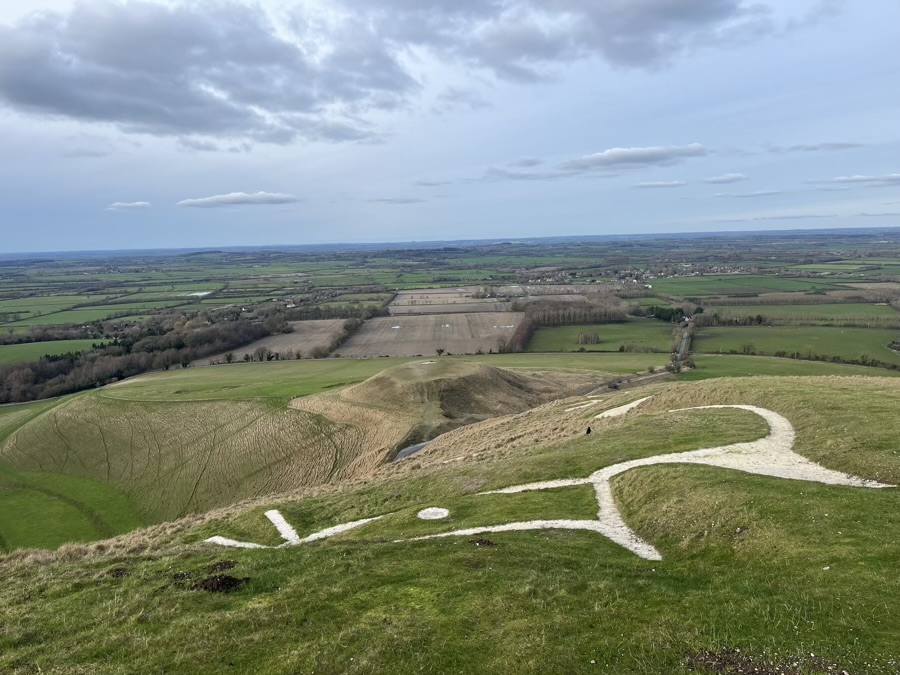
There are many horses etched onto the hilltops in England, but this jewel on the Oxfordshire, Berkshire border is the original mother to them all.
Each time I glimpse its galloping white flash high on a hill, feels just like the first. What’s so incredible to me is that simple yet recognisable shape, the flash of colour, its elegant beauty, have not strayed an inch from those early onlookers who witnessed its conception.
The scene below has sped up, Swindon creeping closer, the forest shredded, shiny cars crawl up the side, muddy boots cut across the escarpment, tiny blades of grass left to suffer. And yet, more incredible still, this place would once have been teeming with more people life than now.
The ruins of an Iron Age fort, Uffington Castle, loom above, but even that weathered mud rump is younger than the sprightly horse.
Maiden Castle might be bigger, Cadbury might be legendary, Old Sarum the ancestor to Salisbury, but none are quite like Uffington.
Why this leaping chalk horse was cut, well truth is, no-one really knows. It’s all guesswork, just like the henges that linger in distant valleys. Prehistoric places invite misconceptions, gather stories as easily as they harbour moss.
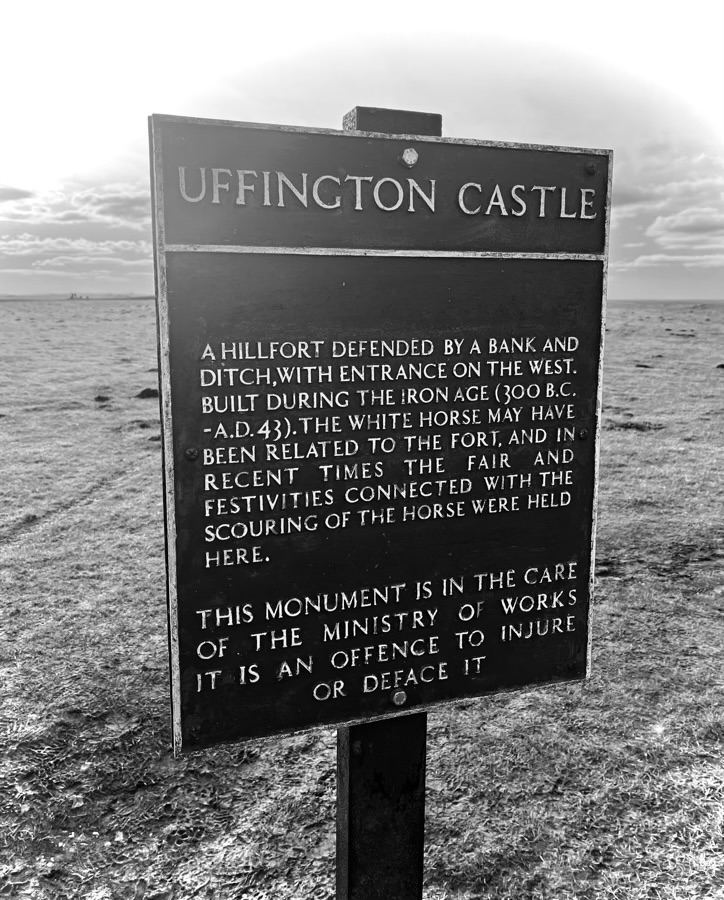
Before any of that though, I can simply appreciate this work of art just like it was cut yesterday. And I don’t know about you, but there are few things in this world which still look exactly the same as they did on the day they were created. The lines on my face tell me that time has taken its toll.
Wintry clouds hang low, tickling its leaping grace. It’s not merely lying on a hillside; it hangs suspended, mid-air, holding more tales than feathers floating in the wind.
The Uffington White Horse