
Surely the most famous door knocker in the land is at No. 10 Downing Street. A solid cast iron lion’s head, created sometime in the 1770’s, retired to a museum in the previous century, the current incumbent a replica moulded from this original, along with a blast-proof reinforced black steel door. There cannot be many accessories - perhaps other than the PM’s kettle - that sees so much daily action, and longevity.
As the 18th century turned, iron gave way to brass, the fashions had changed again. These days however, we can find an array colours, metals, shapes and sizes to attach our doors.
I do enjoy looking at the small details, those which appear to lay dormant for the most part, but when required, have such an ease of use and sense of purpose. Have you ever ever encountered a door devoid of a door knocker and wondered just where to wrap upon, I know I have.
Maybe tech gadgets adore a growing number of doors, as hidden eyes peer through digital lens, but give me the glamour of swinging a simple piece of iron or brass to alert those inside the house, the simplest and most satisfying form of calling.
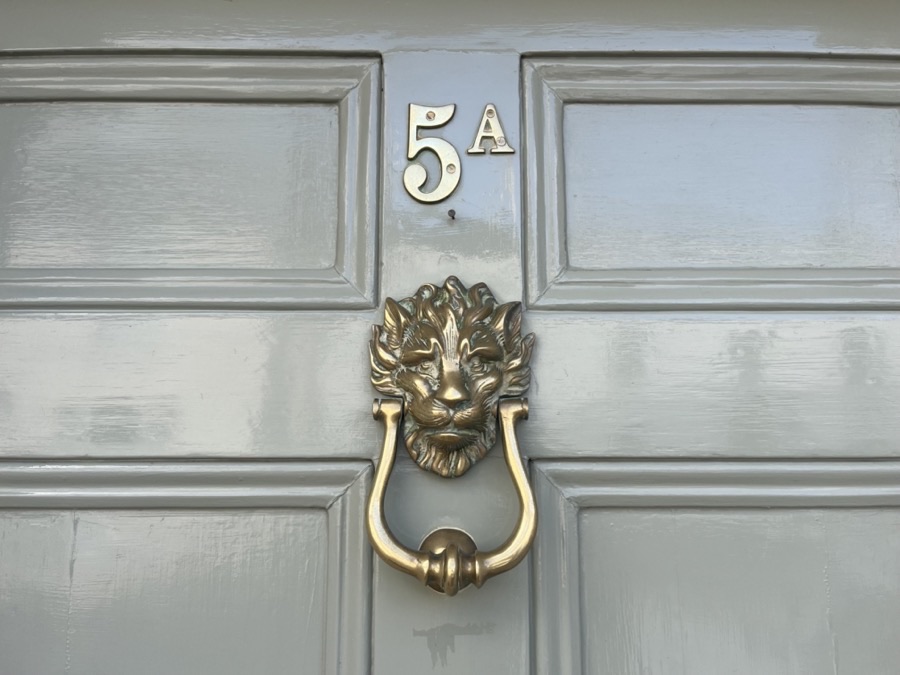
As front doors became more and more a thing to show off your wealth to the waiting world, so too did the furniture which attached to it or syphoned us towards it. Railings, tiles, pots stoked with the lushness of plants and flowers, numbers on a wall, brass door-bell pulleys, and for most others, the simple knocker.
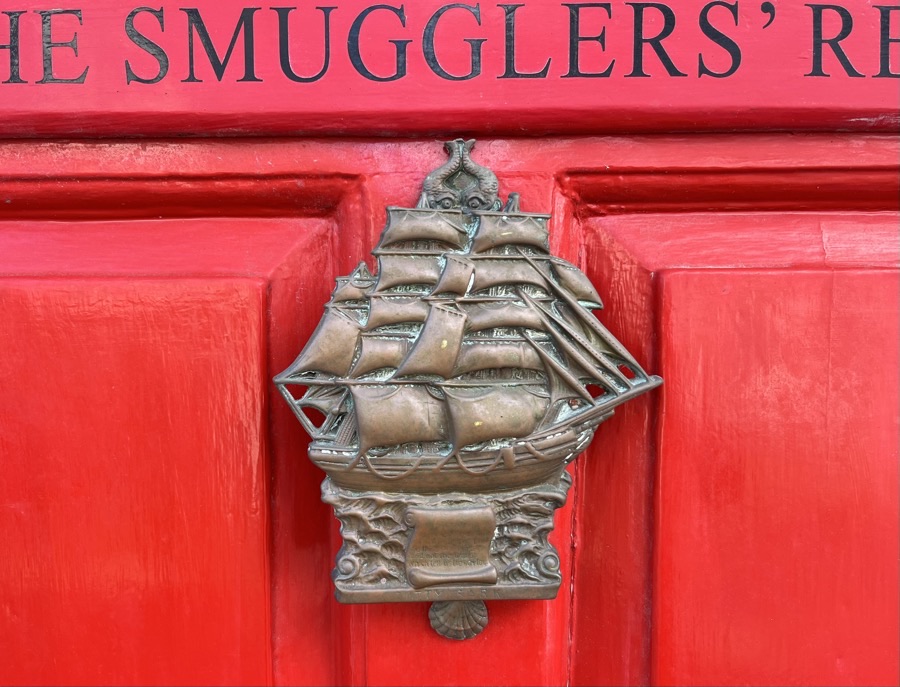
If someone wishes to make a statement, and many do, a solid wood door does well to have sturdy knocker, from fishes to animal heads, woodpeckers to dragonflies, you name it, they’ll cast it.
One of the earliest foundries to start producing these items was in the heated swirl that surrounded industrial Birmingham, and to this day we still has a strong and rare manufacturing sector producing these smouldering bits of metal.
The Smugglers Rest, Emsworth.